The AICTE Activity Points program is a big push from the All India Council for Technical Education (AICTE) that requires college students across the country to go beyond books and get involved with the community.
Under this non-credit course, VTU B.E./B.Tech. students must earn at least 100 points by taking up social work, skill workshops, leadership roles and hands-on innovation. By applying theory to practice, AICTE hopes to shape graduates who carry civic spirit as well as grades, along with the soft skills that improve their employability. Our guide to AICTE activity points covers VTU’s rules in full.
Students can take up activities in several categories. Activities need to show tangible impact, such as working with a nonprofit, ecological conservation, social innovation hackathons or conducting webinars. These are the 15 categories recommended by AICTE:
- School education and enrollment
- Village income business proposal
- Water management system
- Tourism promotion
- Promotion of technologies
- Reducing energy usage
- Skilling the rural population
- Digitized money
- Women empowerment
- Garbage disposal
- Marketing rural produce
- Food preservation and packaging
- Automation of activities
- Public awareness in rural areas
- Government of India initiatives
VTU’s own list of 15 activity heads uses slightly different wording, so check with your college coordinator which head an activity falls under.
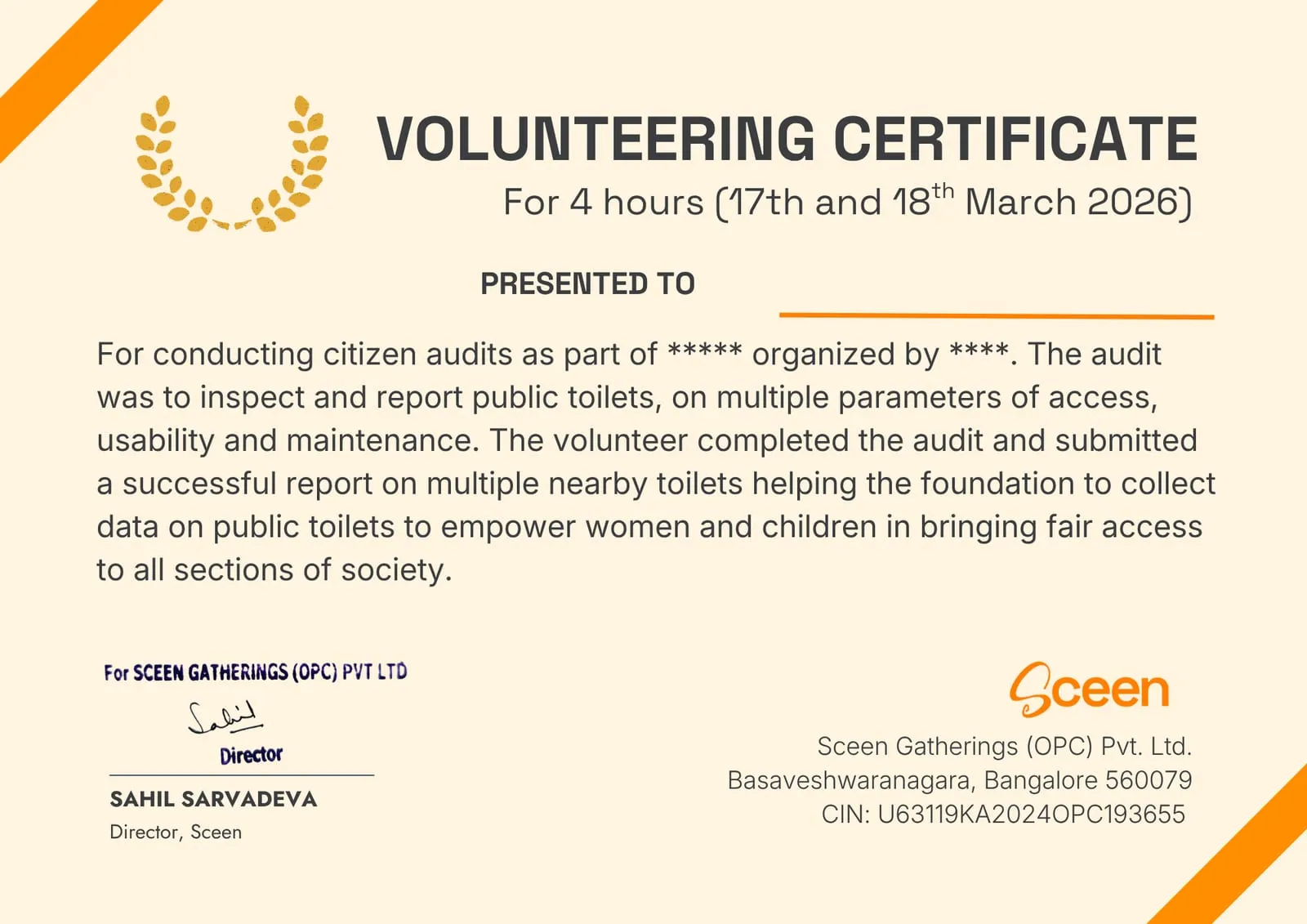
Each activity needs to show relevant social impact and be backed by geo-tagged photos and/or certificates from the organizers. You also need a final report listing every activity you took part in, with its outcomes and the lessons you learnt. Your college records your points in VTU’s AICTE Activity Point Tracking System (APTS) app, and the points are mandatory to graduate.
If you haven’t earned your points by your 8th-semester exams, your grade card and degree are held back until you do.
So take up real, impactful work, keep honest records and write a report that follows the guidelines.
How to find AICTE activities
In person in Bengaluru
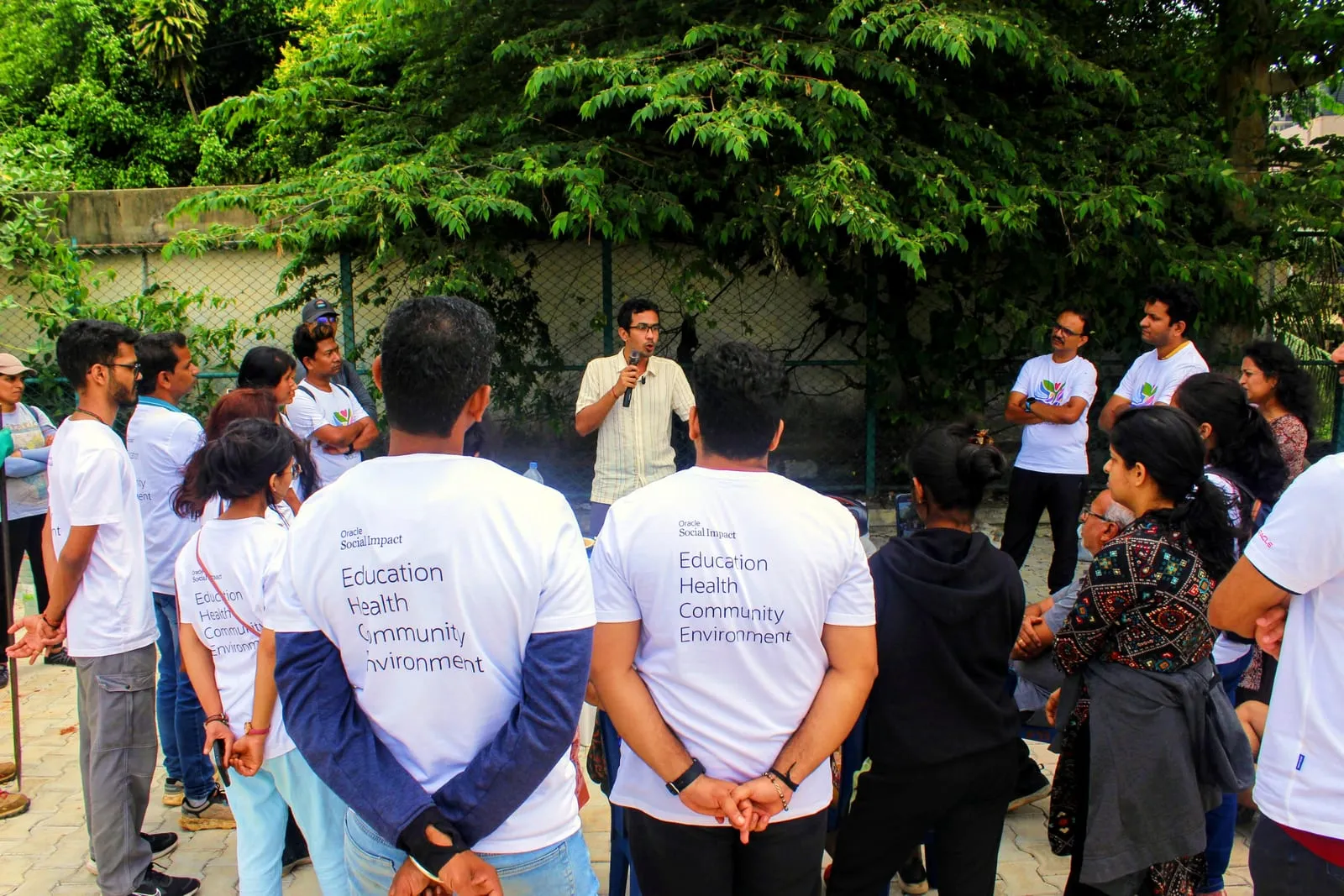
Most colleges have student clubs like the NSS or NCC, and placement cells, that schedule events for AICTE points. You can also look for recognized internships, workshops or volunteer projects on impact activity aggregators like Sceen, and check social media groups dedicated to such opportunities. Another good option is to volunteer with local nonprofits in Bengaluru, which regularly organize public clean-up drives, awareness sessions and health camps. These paths should give you plenty of eligible work that earns points and makes a real difference in the community.
Online
Finding AICTE-approved activities is much easier once you know where to look. Start with the official AICTE website, which outlines recognized categories and guidelines. Your college portal is another useful place to check, as many institutions curate pre-approved programs that already carry activity points.
Next, explore platforms like SWAYAM, MyGov, Sceen and NPTEL, which offer courses, challenges, internships and community roles designed to align with AICTE norms.
How to calculate AICTE activity points
How many points you need to get your degree depends on how you joined it:
| Student category | Activity points |
|---|---|
| Regular student admitted to the 4-year degree programme | 100 |
| Student entering the 4-year degree programme through lateral entry (3rd semester) | 75 |
| Student transferred from another university to the 5th semester | 50 |
Every 20 points takes 80 to 90 hours of work, a little over 4 hours a point. So 100 points works out to roughly 400 to 450 hours of impact work.
You can earn at most 20 points under one activity head. To reach 100 points, you have to spread your activities across at least 5 different heads.
Examiners also check for inflated points, activities that don’t match their head and inconsistent reporting. So take up AICTE activities regularly through your degree, in your free time like weekends and holidays, and finish them all before your 8th-semester exams. Message Sceen to hear about upcoming activities in Bengaluru.
How to report AICTE activities
You need to put together a consolidated report of all your activities, with proof of work and details of what you did and what came of it. The report needs to be signed by the faculty coordinator, head of department and principal after they check the activities, the certificates you received and the points you earned.
Here’s an outline of the sections in your report and what each should contain.
| Section | What it contains |
|---|---|
| Cover page | The VTU logo, student name, USN, department, college logo, graduating year and key details of the report. |
| Certificate | Official validation of participation in activities, signed by the faculty coordinator, HOD and principal, with the department logo and a description of the engagement. |
| Acknowledgement | Thanks to the principal, faculty members and activity coordinators for their guidance and support through the program. |
| Index | An organized list of report sections and subsections with their page numbers. |
| List of tables | Every data table in the report, with its title and page number. |
| List of figures | Graphical or pictorial figures, with figure numbers, titles and page references. |
| 1. Introduction | A brief overview of the AICTE activity point system and its role in holistic student development. |
| 2. Review of guidelines | AICTE’s guidelines. |
| 2.1 Programme framework | The structure and goals of the AICTE activity point programme. |
| 2.2 Points calculations | How points are assigned based on hours, the nature of the activity and its category. |
| 2.3 Considerations | The rules, eligible activities and criteria for approval set by AICTE. |
| 3. Activities | Each activity, listed separately. |
| 3.1 Purpose | The intended goals or learning outcomes of the activity. |
| 3.2 Planning | The preparation process, the stakeholders involved and the resources required. |
| 3.3 Execution | How the activity was carried out, the challenges faced and the roles taken on. |
| 3.4 Results | The learning gained, the impact on students and the overall benefits of the activity. |
| 4. Outcomes | |
| 4.1 Outcomes for the student | Personal growth, skill development and exposure gained through the activity. |
| 4.2 Outcomes for coordinating partners | Benefits to the NGOs, industry partners or community groups that worked on the activity. |
| 4.3 Outcomes for other beneficiaries | Impact on the local community, the environment or target groups (for example, school children or villagers). |
| 5. Results | |
| 5.1 Activity-wise summary | A table of all activities with category, dates, hours, certifier and points earned. |
| 5.2 Category-wise summary | A breakdown of activities under each category, with the total points. |
| Appendix A: Certificates | Scanned or tabular copies of certificates with student details, activity specifics and authorized signatures. |
| Appendix B: References | The sources, guidelines or documents referred to while preparing the report, with proper attribution. |
Have your faculty coordinators review your report from time to time, and don’t leave it to the final semester. Platforms like Sceen can help review your report, suggest changes, structure the content and find suitable activities to complete your 100 points and reporting requirements.
Challenges with the AICTE Activity Points program
Lack of awareness
Many students don’t know what qualifies as an activity. Some colleges don’t explain the process clearly, especially to first-year students, and students often hear about the requirement late in their course. Many college faculty are also not well versed in the AICTE framework or don’t have enough incentive to guide students, which leads to substandard activities and reporting.
Difficulty finding valid activities
Students struggle to find AICTE-approved programs or platforms. Not all colleges show students how to check whether an activity is eligible for points. Rural colleges may have fewer opportunities and no central process to vet them.
Documentation issues
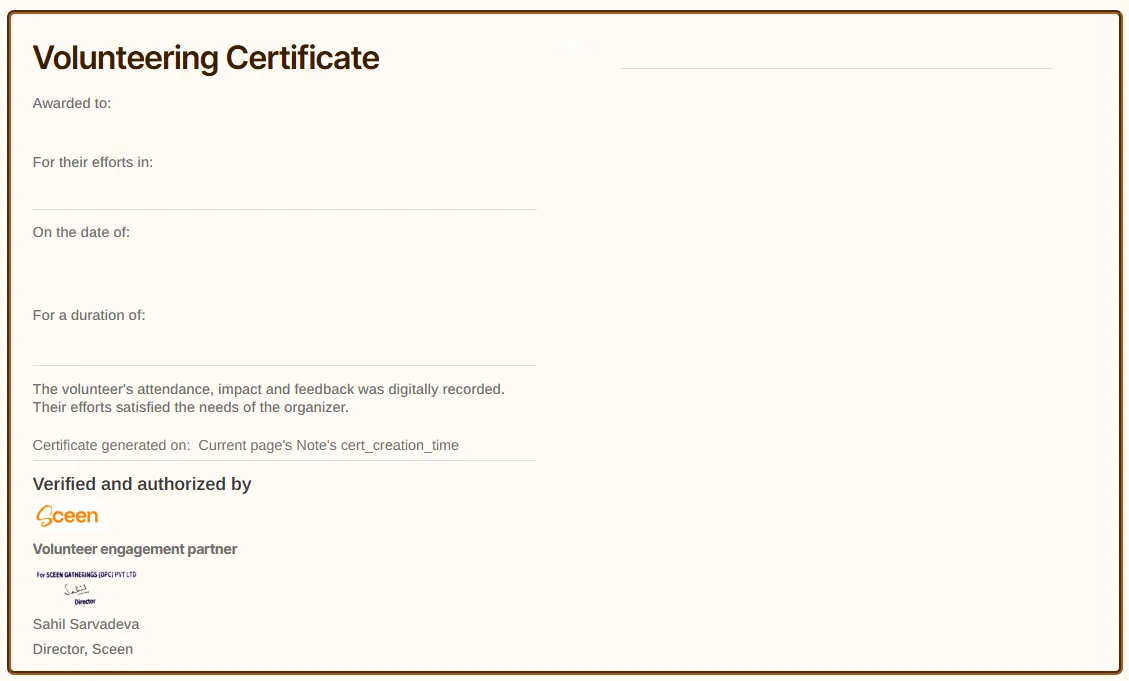
Collecting proof and certificates from activities can be confusing. Sometimes certificates don’t mention the duration or role, which leads to rejection by the college. Students also often forget to get signatures or approvals on time.
Cost or accessibility
Some programs, such as online courses and seminars, require payment. Students from financially weaker backgrounds may find it hard to pay for several events. Online-only options are not always engaging, or easy to access with a poor internet connection.
Time management
With regular classes, exams and assignments, it’s hard to find time for extra activities. Some activities clash with the academic calendar or with exams.
Last-minute completion
Many students wait until the final semester and rush to complete all 100 points before the 8th-semester exams. This leads to low-quality experiences or fake submissions, which are risky.
Risk of fraud
Some students buy certificates or take part in fake events just to get points. This goes against AICTE’s purpose and can lead to the degree certificate being withheld. Then there are ready-made reports that are copy-paste jobs, easily detected and rejected by plagiarism checks. Some students also report inflated hours for trivial social work.
The safest route is to stick to transparent, well-reviewed initiatives: ones approved by your college, listed on the official AICTE portal, or run by partners with a track record you can check, like Sceen’s past activities. In the end, credibility counts for more than shortcuts.
How the AICTE Activity Points program helps your career
Promotes social responsibility
Activities with NGOs or community projects build empathy and a sense of civic duty, as students become responsible citizens by taking part in clean-up drives, rural engagement and similar work.
Boosts your resume and career profile
Certificates from these activities are valuable for job interviews and higher studies, and they show that the student is active, engaged and multi-talented. Once you sign in on upcoming activities, your activities, hours, certificates and badges on Sceen are all in one place.
Encourages innovation and entrepreneurship
Some activities include startup events, idea competitions and business model contests. These develop creative thinking and a problem-solving mindset.
Rural empowerment
Many activity categories are directed towards helping rural workers, families and businesses. Students need to understand, visit and experience rural India, where about two-thirds of the population lives, to understand its real problems and build relevant solutions.
Networking opportunities
Students meet active citizens from other colleges, companies, nonprofits and social organizations. These connections can grow into internships, jobs or mentorship.
Summary
AICTE has taken a big step to engage students in meaningful socio-entrepreneurial work, which, if implemented well, can bring a wave of change. Students need to take it seriously and use the program to build their careers. Nonprofits and beneficiaries can also gain a great deal from structured, transparent and accountable execution.
We at Sceen want to partner with colleges and nonprofits to upskill, empower and make a real impact on our society, starting with Bengaluru Urban.
If you want to join us on this journey, message us.
Let’s make a Sceen!